


These views are mine and mine only: they do not represent my employers.
“I have gathered a posy of other men’s flowers, and nothing but the thread that binds them is mine.”
— Michel de Montaigne, Essays (1580)
Hello,
This is the third offering in an intermittent series rounding up things I’ve read that have piqued my interest. There is no definitive line that draws them together. I’m archiving them all in one place which allows me to dwell on them at a future date.
This edition is heavy on weird old naval ships and a writer/spy relaying tales of Essex men with dozens of wives.
Figures, facts and numbers of note:
The US produces a new submarine every 10 months. To hit its commitments under AUKUS, it needs to bump that number to one every 5/6 months if it wants to keep its fleet intact.
Two million new academic journals articles are produced a year. Roughly half are read by only three people.
Afghanistan was the first modern war in which the deaths of the number of contractors - private military companies and similar - outweighed that of state-soldiers.
On 20th century potential ship designs
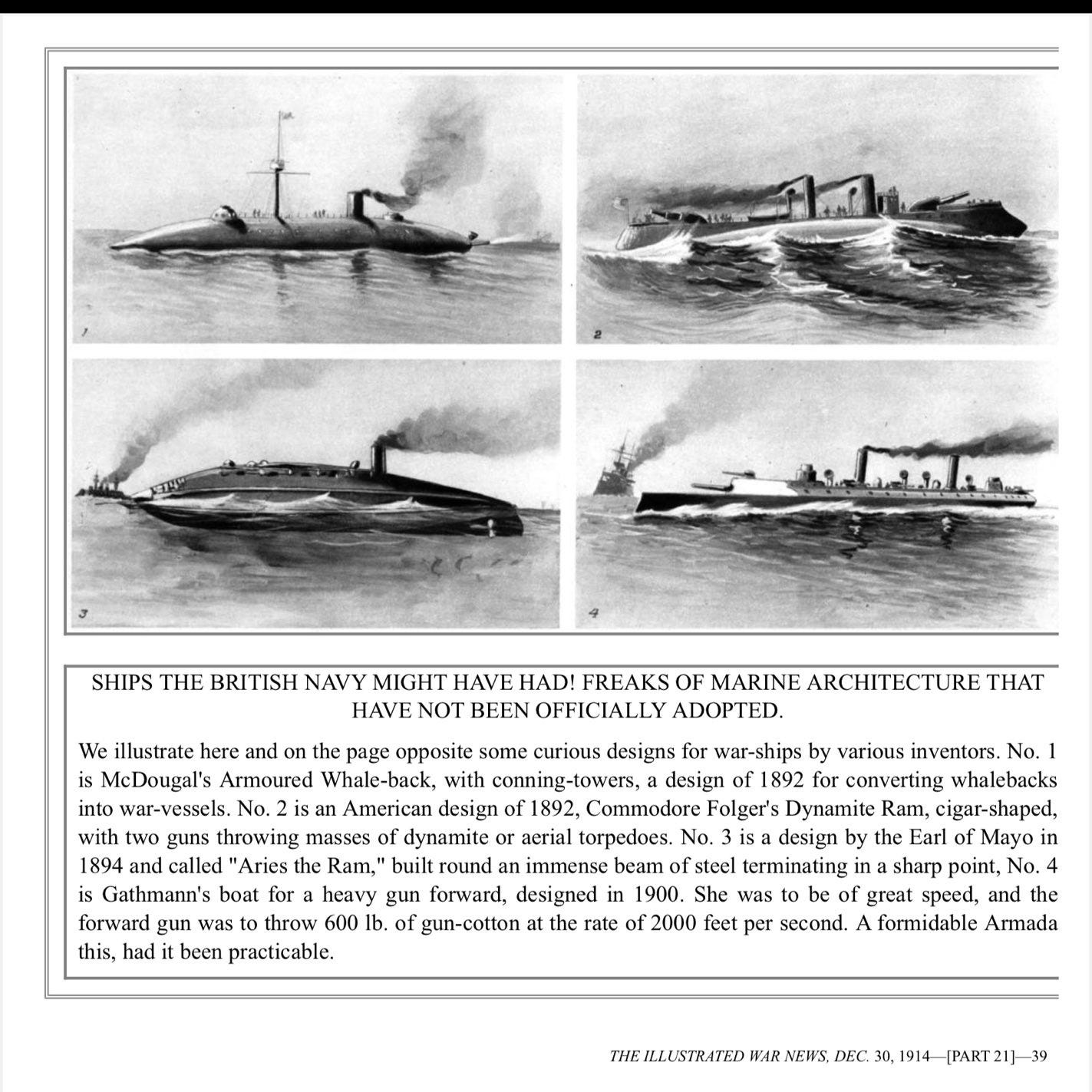
At the outbreak of World War I, a British propaganda magazine called Illustrated War News was launched. The premise of this magazine was to create visual reporting of WWI from an allied perspective, with strong pro-British propaganda elements running through. Flicking through the pages, the reader arrives at a section titled “FREAKS OF MARINE ARCHITECTURE THAT HAVE NOT BEEN OFFICIALLY ADOPTED?” which includes several designs, shown above.
Besides the point, but the magazine returned into circulation for just one month at the beginning of World War II before being cut.
On the origin of the term ironclad
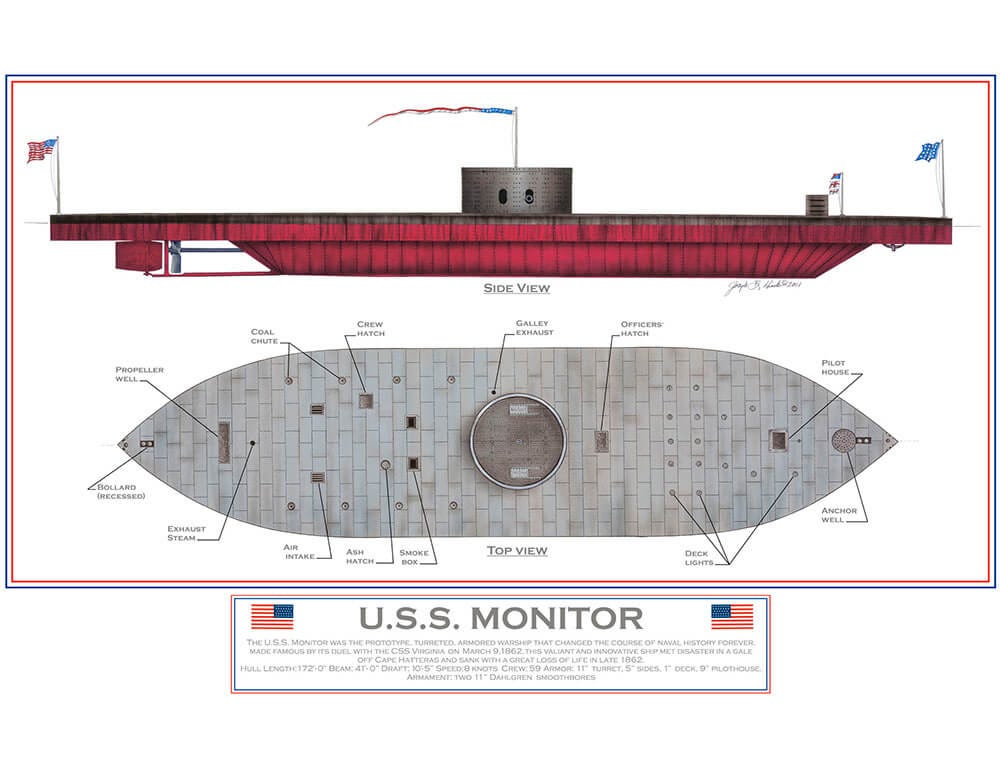
A long journey from Glasgow to London provided ample time to dig into the American Civil War again. Tangentially related to the above, and a previous foray into learning about early submarines, the conflict saw the perhaps the most famous episode of naval warfare between “ironclad warships” such as the U.S.S. Monitor. The term ironclad entered the lexicon off the back of the introduction of these ships.
A couple of notable points:
These ironclad vessels barely broke the surface of the water. The deck was about a foot and a half above the waterline, or the size of a house cat sitting up. To an amateur observer, they appear more like submarines than conventional warships.
That meant they had to be towed through the sea, and these early designs were used primarily for river fighting or defending coastal areas. This account, compiling eye witness reports, tells of the U.S.S. Monitor’s near sinking in one such incident - it’s gripping.
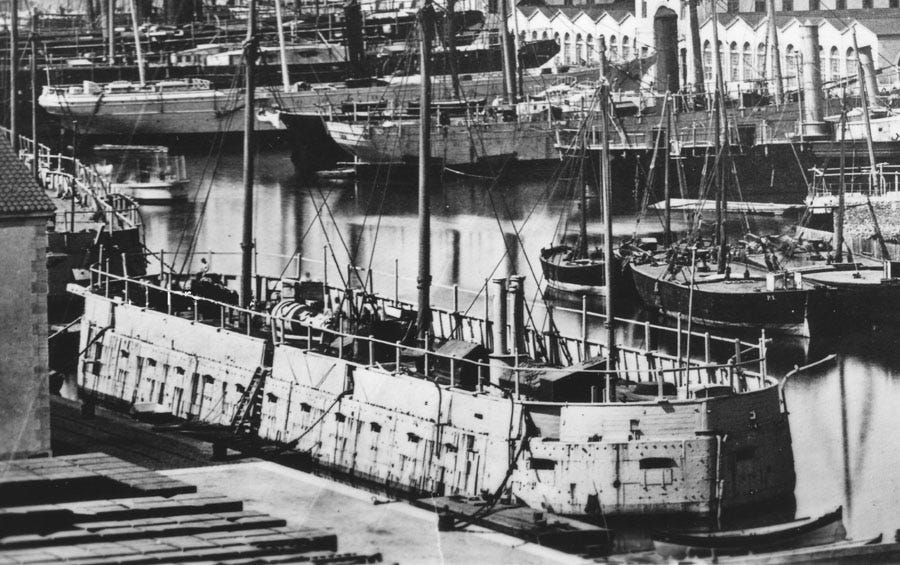
Digging further into other types of odd historical vessels, a reader comes across “floating batteries.” These were were essentially armoured, stationary or slow-moving gun platforms - precursors to true ironclad warships - and were effectively used by the French during the Crimean War (1854-1856) in the bombardment of Russian fortifications at Kinburn.
On men in Essex having 20 wives
Lots of ink has correctly been spilled on the slop AI produces (at the request of slop humans, it is worth adding). Novel fun ways of using the technology are rare but pleasing to stumble across, and so one can find oneself asking Claude the following:
“Who was the Bill Bryson of the 17th, 18th and 19th century, in terms of comical writing about Britain at the time?”
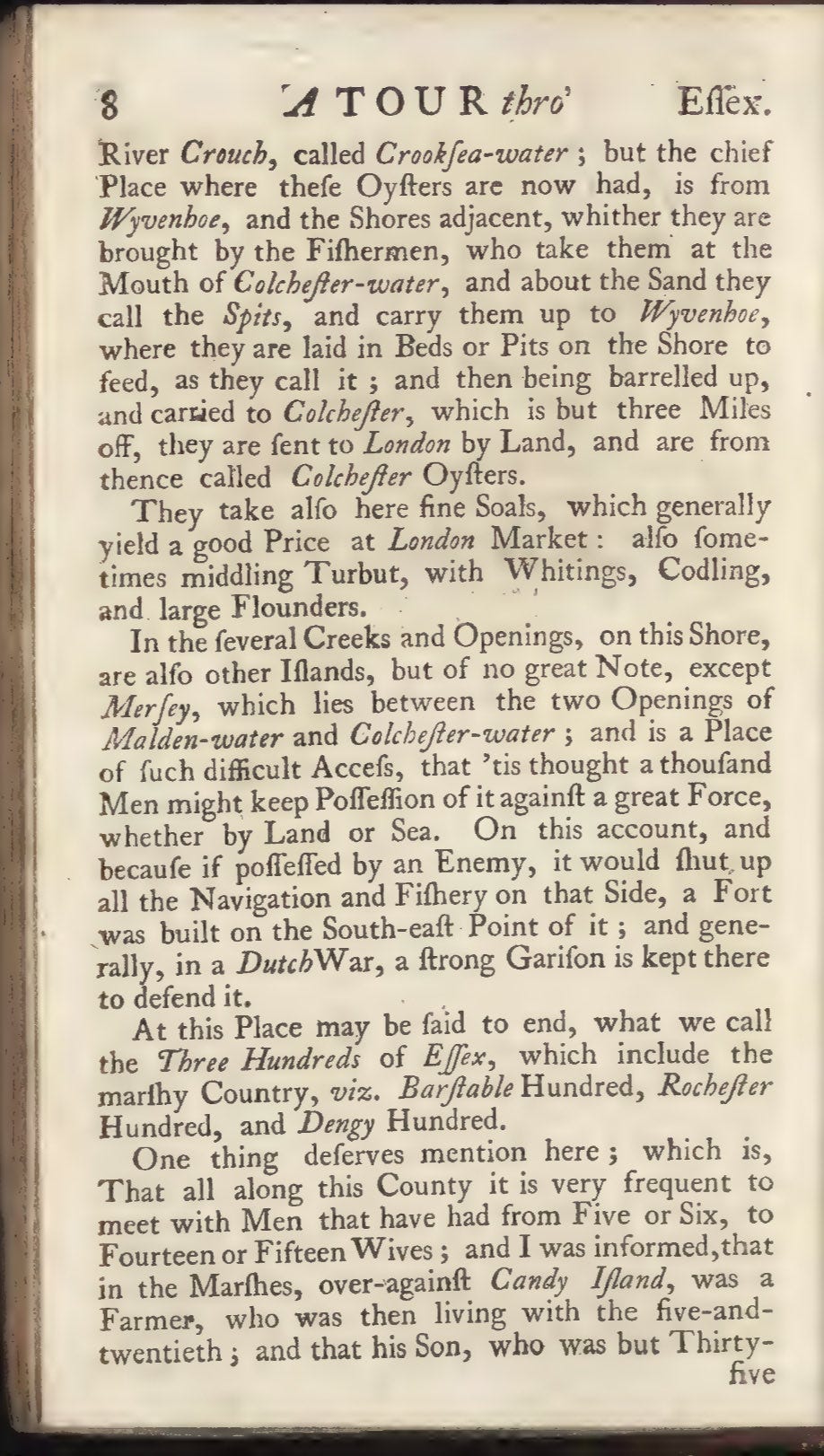
The LLM suggests to a gossipy book from the 1740s about walking through England. It’s a good skim: the author uses F instead of S, which somewhat ruins the emergence, but more than makes up for it by including clearly baseless gossip. He relays, for example, that men in the Essex marshes had upwards of 20 wives, citing a ‘trusted’ source. This source told him Essex men went “up-land” for wives, but when these new partners were brought into the damp, foggy marshes they soon turned sickly, got ague, and often died. So the process restarted, a new wife was acquired, and a new grave dug soon after.
So who is the author of this vivid account of English life? None other than Daniel Defoe, sometime merchant, wheeler dealer, spy for William of Orange, and also the creator of Robinson Crusoe.
Let me know your views and what you’ve been reading, plus anything you think I should be looking at.